Custom Rubber
Molding.
Precision rubber components engineered for aerospace, automotive, appliance, and industrial applications — from prototype through full-scale OEM production.
Custom rubber molding built around your application.
Every project starts before a single tool is cut. Our engineers review your design for manufacturability, recommend the right molding process, identify the optimal elastomer, and flag cost-saving opportunities — so you get the right part the first time.
From seals and grommets to vibration isolators, rubber-to-metal bonded assemblies, and aerospace cushion clamps, we manufacture precision rubber components that perform in demanding real-world conditions across aerospace, automotive aftermarket, appliances, car wash systems, and more.

Rubber molding processes.
We select the right molding method based on your part geometry, volume, material, and cost requirements.
Compression Molding
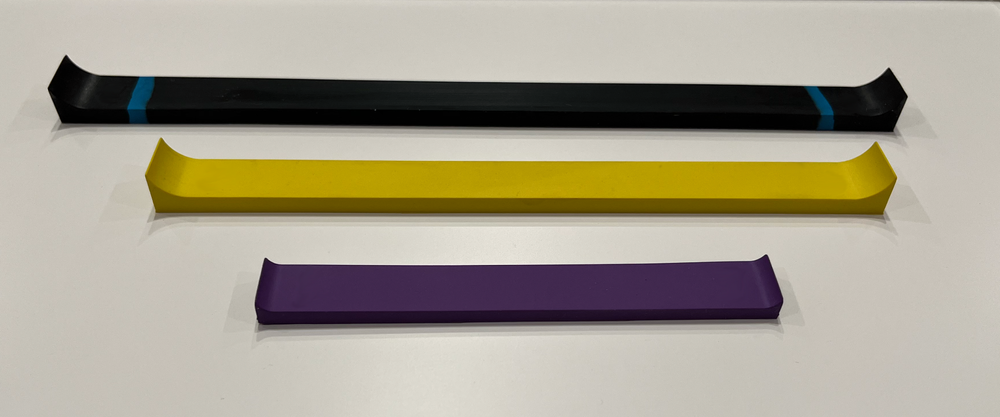
The most cost-effective process for larger rubber parts and high-volume programs. Material is placed directly in the mold cavity and formed under heat and pressure.
- Lowest tooling cost
- Ideal for thicker cross-sections
- Low to high volume programs
- Wide material compatibility
Transfer Molding
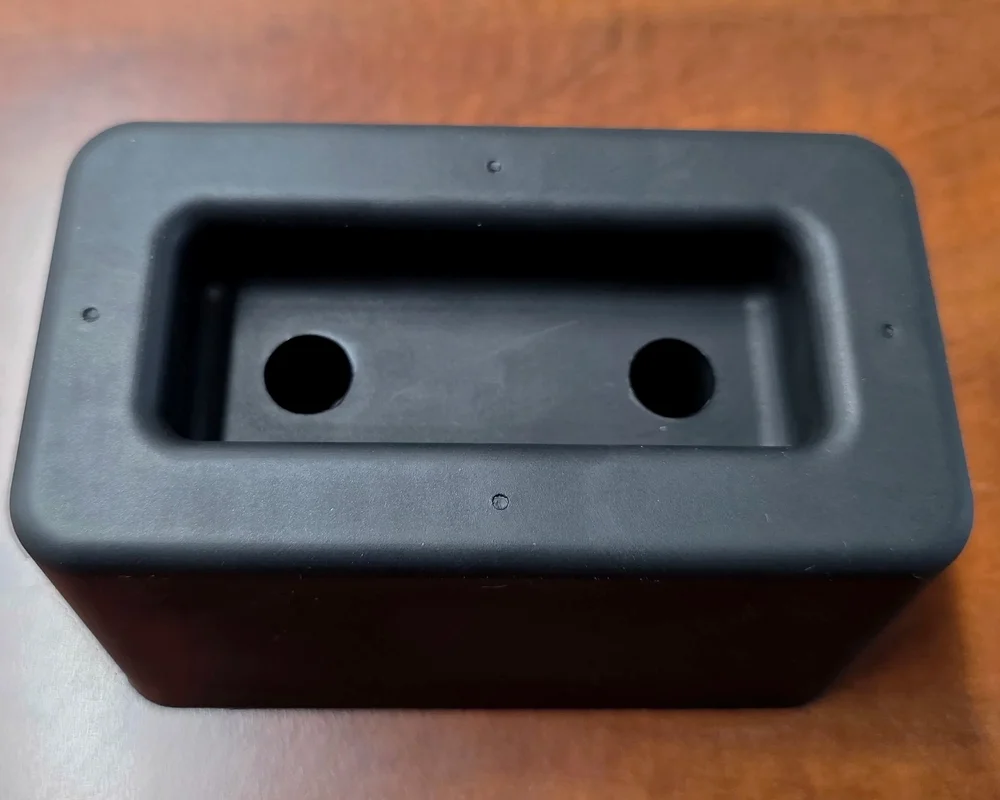
Improved material flow and dimensional control over compression. Well-suited for rubber parts with inserts, bonding requirements, or more complex geometries.
- Insert & bonding capable
- Better dimensional consistency
- Complex geometry support
- Reduced flash vs. compression
Injection Molding
Highest consistency and repeatability for complex rubber components. Material is injected under pressure for tight tolerances and fast cycle times at scale.
- Tightest tolerances
- Fastest cycle times
- High-volume repeatability
- Minimal material waste
Rubber components built for demanding applications.
We manufacture custom rubber molded parts for industries where performance, durability, and dimensional accuracy are non-negotiable.

AMS & MIL-SPEC grade rubber components for critical aerospace applications.
We manufacture rubber cushions, vibration isolation mounts, environmental seals, and more for commercial aircraft, military aviation, and spacecraft systems.

High-performance rubber parts engineered for automotive aftermarket applications.
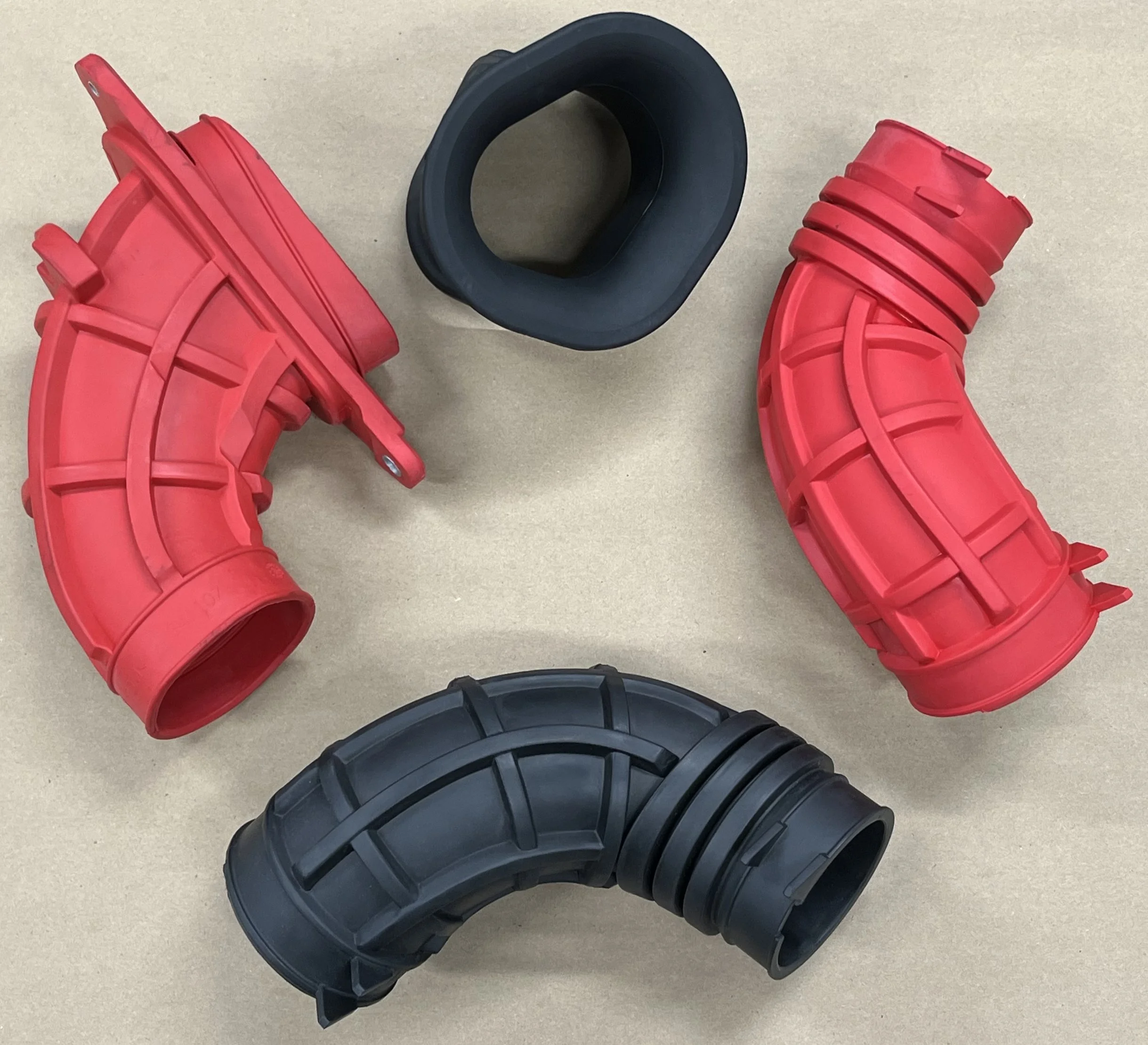
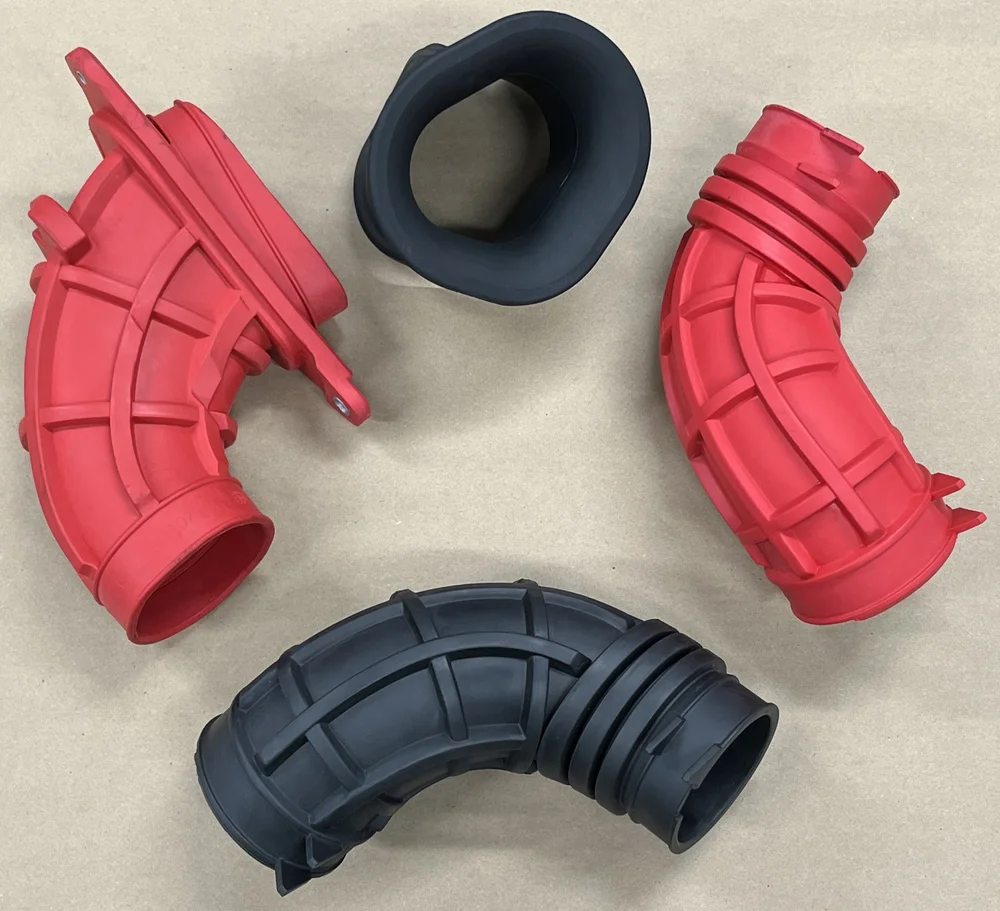
From intake system components and grommets to custom seals and vibration dampeners, we produce aftermarket automotive rubber parts that match or exceed OEM specifications. Our materials are selected for fuel, oil, and heat resistance in demanding underhood environments.

Precision rubber components that meet the demands of consumer and commercial appliances.
We supply rubber feet, seals, gaskets, and vibration isolation components for major appliance manufacturers. Our rubber compounds are selected to withstand detergents, temperature cycling, and long-term mechanical fatigue common in appliance environments.
Which process is right for your part?
Use this as a starting point — we'll evaluate your specific geometry, volume, and material during design review and recommend the best fit.
| Criteria | Compression Molding | Transfer Molding | Injection Molding |
|---|---|---|---|
| Part Complexity | Simple to Moderate | Moderate to Complex | Moderate to Complex |
| Tooling Cost | Low | Medium | Medium – High |
| Production Volume | Low to Medium | Medium to High | Low to High |
| Insert / Bonding | Limited | Yes | Yes |
| Dimensional Consistency | Good | Very Good | Excellent |
| Flash Generation | Higher | Moderate | Minimal |
| Best For | Cost-sensitive, larger parts | Inserts, bonded assemblies | Tight tolerances, high volume |
Rubber materials, standards & performance properties.
We work with a comprehensive range of engineered elastomers selected for temperature, chemical, mechanical, and compliance requirements across every industry we serve.
Industry Standards & Compliance
- MIL-SPEC rubber compounds
- AMS material specifications
- ASTM molded rubber standards
- FDA approved / food-grade rubber
- UL recognized materials
Rubber Materials We Process
- EPDM
- NBR (Nitrile)
- Neoprene
- SBR
- Fluorosilicone
- Silicone
- FKM (Viton)
- Natural Rubber
Performance Properties
- High-temperature resistance
- Low-temperature flexibility
- Chemical & fuel resistance
- Weather & ozone resistance
- Vibration isolation & dampening
- Sealing & environmental protection
Common questions about custom rubber molding.
Answers to the questions that engineers, buyers, and product teams ask when evaluating a rubber molding partner.
Compression molding is the most cost-effective process — uncured rubber is placed directly into an open mold and formed under heat and pressure. Transfer molding offers better dimensional control and supports inserts and rubber-to-metal bonding. Injection molding delivers the tightest tolerances and fastest cycle times, ideal for complex, high-volume parts. We recommend the right process based on your geometry, volume, and budget during design review.
It depends on your temperature range and chemical environment. Silicone (VMQ) is the most versatile, rated -65°F to 450°F. Fluorosilicone (FVMQ) covers a similar range with added fuel and solvent resistance — common in aerospace and automotive sealing. FKM (Viton™) is preferred where high heat meets aggressive chemicals like oils and hydraulic fluids, rated up to 400°F. For the most extreme environments, FFKM (Perfluoroelastomer) handles up to 600°F with near-universal chemical resistance. EPDM is the most cost-effective choice for water, steam, and outdoor weathering up to 300°F, but is not compatible with petroleum-based fluids. We help you identify the right compound during our material selection process.
MIL-SPEC rubber meets U.S. military material and performance specifications for aerospace and defense applications. Yes, we work with MIL-SPEC and AMS certified materials including Neoprene (AMS3209/MIL-C-8603), EPDM (MIL-DTL-85052/2), Silicone (AMS 3310), and Fluorosilicone (MIL-DTL-25988). Contact us to discuss requirements for your program.
Yes. Rubber-to-metal bonding bonds rubber directly to a steel or aluminum insert during vulcanization, producing a single integrated component with strong adhesion between materials. It's commonly used for vibration isolation mounts, engine mounts, bushings, and structural damping components. Transfer and injection molding are preferred for bonded assemblies due to better material flow and dimensional consistency. We handle insert preparation, surface treatment, and bonding as part of the molding process.
Most tooling takes 3 to 6 weeks depending on complexity. Simple compression molds are on the shorter end, while multi-cavity injection molds or complex geometries take longer. First article samples are submitted for your approval before full production begins.
Custom molded rubber is used wherever sealing, vibration isolation, or environmental protection is needed. We regularly serve aerospace, aftermarket automotive, appliances, car wash systems, law enforcement vehicles, and water filtration. If your application involves rubber in a demanding environment, we can help engineer the right solution.
There is no fixed minimum order quantity for custom rubber molding. We support everything from small prototype runs to high-volume OEM production. Custom molding requires an initial tooling investment, so we work with you during design review to structure the program around your volume and budget — including tooling strategies that minimize upfront cost for early-stage programs.